Research Centers
The research centers affiliated with the UC Faculty of Economics and Business are hubs of academic excellence dedicated to high-impact scientific research. Through these centers, our faculty members conduct rigorous studies that generate new knowledge, inform public policy, and provide key evidence to address the social and economic challenges facing Chile and the world.
These centers are a fundamental part of the Faculty’s mission: to educate individuals and produce knowledge that contributes to the development of a more inclusive, equitable, and sustainable society.
J-PAL Latin America and the Caribbean (J-PAL LAC) is a research center dedicated to reducing poverty and improving quality of life across Latin America and the Caribbean by generating rigorous scientific evidence on what truly works. Its work focuses on conducting randomized evaluations of social programs, producing evidence that helps inform and strengthen public policy throughout the region.
With a global network of more than 900 affiliated researchers, J-PAL has established itself as a leading international authority in the generation of evidence for social development.
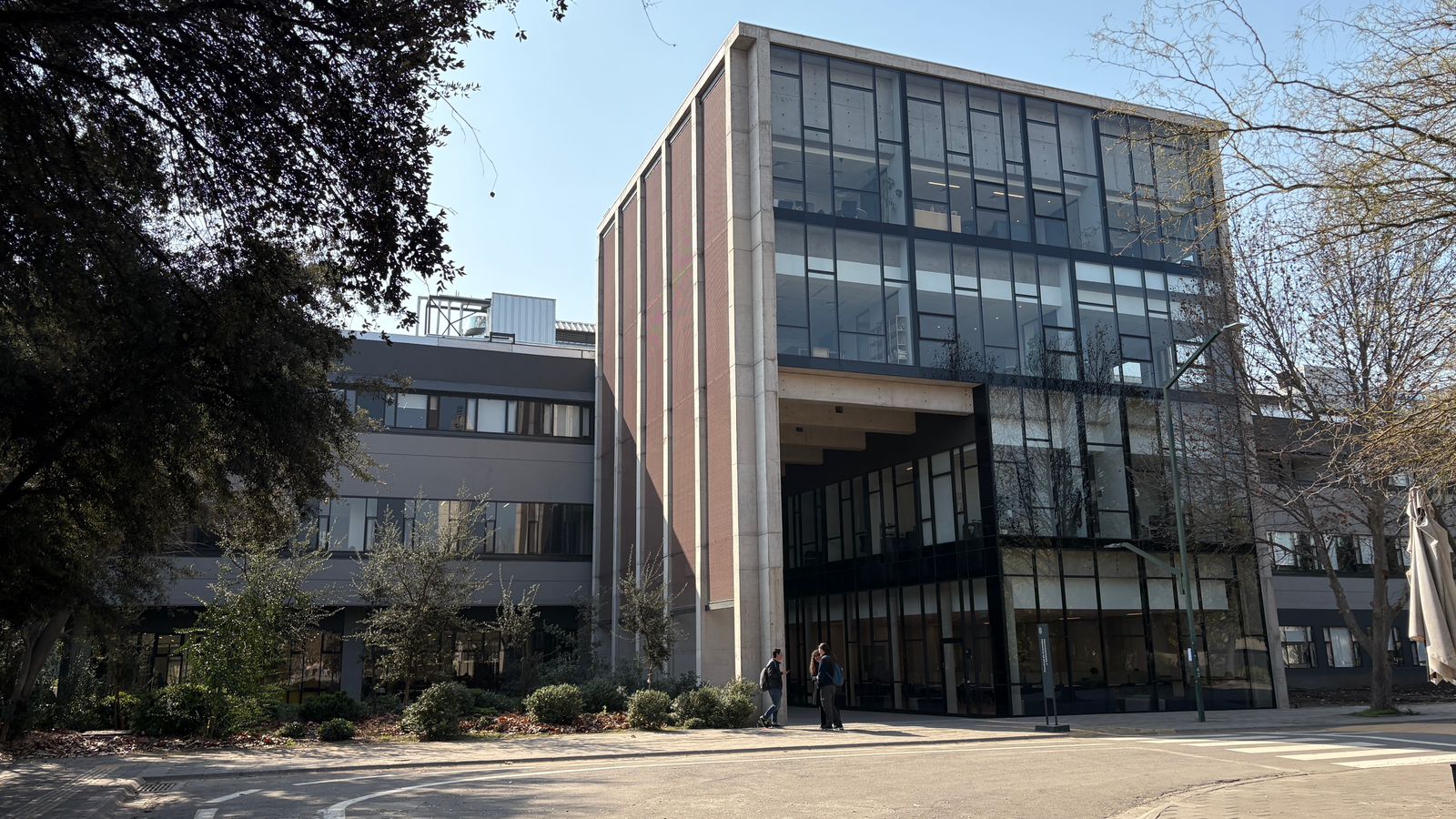
Since 2009, J-PAL’s Latin America and the Caribbean regional office has been based at the UC Faculty of Economics and Business, enabling our academic community to witness—and actively contribute to—the center’s impact across the region.
This center brings together a team of researchers dedicated to the study of Chile’s economic history, development, and the role of institutions. Its work provides historical perspective and rigorous evidence to deepen understanding of the country’s current and future challenges.
The laboratory focuses on academic research aimed at analyzing and strengthening institutions, developing and maintaining historical economic data series, and disseminating its findings both within the academic community and to the broader public. Through these efforts, it contributes to a more informed debate on economic and social development.
This center promotes and conducts cutting-edge research in the field of finance. Its mission is to generate rigorous knowledge that advances academic debate and contributes to the development of a stronger and more transparent financial sector.
The center fosters an academic environment that encourages collaboration and exchange with the international research community while also contributing to industry and regulatory discussions through the scientific analysis of key financial issues.
The Latin American Center for Economic and Social Policies (Clapes UC) is a research and policy center dedicated to developing practical proposals that foster the region’s economic and social development. Its work focuses on identifying the incentives that promote economic growth, productivity, investment, and job creation.
Clapes UC also examines ways to enhance market competition and reduce poverty and income inequality while supporting sustainable economic growth. Through rigorous research and evidence-based analysis, the center contributes to the design of public policies that generate a positive impact on society.
The UC Center for Public Policy is committed to contributing to Chile’s development by connecting the University’s academic work with the country’s most pressing public challenges.
Its mission is to develop policy, social, and economically sustainable solutions; inform the design of public policies through rigorous research, evidence, and thought leadership; and promote collaboration among diverse stakeholders around a shared goal: building a more equitable and sustainable Chile.
The center reports to the Office of the Vice President and Provost of Pontificia Universidad Católica de Chile and is guided by an Academic Council composed of representatives from nine faculties, including the UC Faculty of Economics and Business. This interdisciplinary governance structure ensures a broad and pluralistic approach to addressing public policy challenges.
The center’s primary mission is to promote interdisciplinary research on the family, drawing especially on the expertise of the Faculties of Law, Education, Medicine, Theology, Philosophy, Social Sciences, and Economics. Its work addresses the challenges facing families in contemporary society while fostering a deeper understanding of the family as the primary setting for experiencing the fundamental communion of love and affirming the inherent dignity of each of its members.
The Center’s mission is to advance research and teaching on Asia, with the aim of expanding knowledge of the region’s countries, cultures, and social, economic, and political dynamics in Chile and across Ibero-America.
The Center also seeks to strengthen ties between Pontificia Universidad Católica de Chile and a wide range of Asian institutions—including cultural, educational, and economic organizations—by fostering partnerships and promoting collaboration among researchers, faculty members, students, and other stakeholders.
Faculty members Raimundo Soto, José Díaz, and Andrés Ibáñez from the UC Faculty of Economics and Business contribute to the Center through their expertise and research, supporting its academic mission and development.
The center’s purpose is to generate and transfer interdisciplinary knowledge that helps identify needs, develop innovative solutions, and train change agents capable of contributing to the sustainable development of society.
Established through a partnership among five faculties—Agronomy and Forest Engineering, Biological Sciences, Engineering, Economics and Business, and History, Geography and Political Science—the center focuses its efforts on basic and applied research into the biophysical and human dimensions of global change.
The UC Faculty of Economics and Business actively contributes to this collaborative effort by bringing its academic perspective to the analysis of the economic and social impacts of climate change.